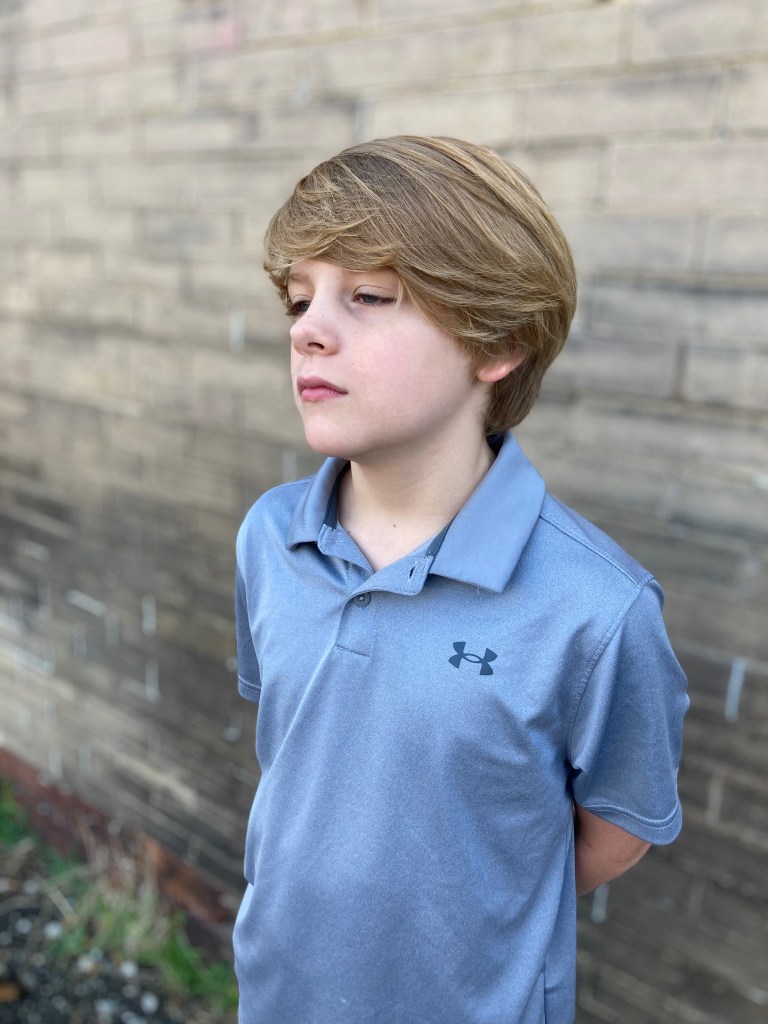
There are moments in life where we wish we would’ve just known. If somebody would’ve just told me. If I would’ve just been informed. If there were an instruction booklet. If I only knew….
I could do the “what if game” all day or I can share our experiences.
Since kindergarten (now going into fourth grade) Bub has said he hates the way he looks, that he has no friends, that he hates school, that he can’t wear blank shoes because they all know they came from blank department store and will make fun of him. Even though he can’t wear blank shoes, HE HAS to wear blank shoes because HE refuses to wear anything else and has for the last 3 years, so I’ve bought every size I can find just in case this is all he will wear for the rest of his life. His socks have to be just so. He can’t wear long sleeves today or anymore because something changed overnight. Jeans are no longer acceptable, but tomorrow jeans will be the only form of acceptable pants (I know some of you can relate we’ve talked about it). He cries or yells nearly every day before school because he just doesn’t like anything about it or himself.
We have asked him multiple times about bullies, teachers, staff that come in and out of the classroom, about the bus driver and kids on the bus, but he always says that is not the issue and that he just doesn’t like it at all. I’ve asked if he wants to change schools or even home school (even though that’s not a viable option for our family) … all no’s or nothings.
After studying some about depression, anxiety and ADHD I’ve learned that he quite literally doesn’t feel comfortable in his own skin, body and brain and doesn’t know how to tell anyone. It is an imbalance on the inside, a timing piece in the brain, a Mis alignment of the spine or even an overgrowth of bad bacteria in the gut (yep, ADHD is not necessarily just the brain). These are all signs we need to pay attention to. I would never have known this if this didn’t all come to a scary, ugly head this year.
This year has been the worst. I didn’t notice how many times he was so negative to himself. In between the rough mornings are also good moments too. Michael is a smart kid. Maybe he doesn’t do well when it comes to spelling or math, but he’s smart. He reads and comprehends above target for his grade. He is very creative, clever, he’s also kind and compassionate. He thinks about other people all the time. He always worries how others might feel. He wants to make sure that people are happy and that they know they are loved. He is giving and is always making things for other people. There are good times in between these crazy mornings.
I would’ve never have guessed depression and anxiety. Which is odd to think about because our daughter suffers from it as well, it just looks different for her, but that’s for another blog. We suspected ADHD, but I’ve always been against medication for many reasons. One selfish reason is that I grew up with it (never officially diagnosed) and made it through ok. I found ways to adapt and push to the other side of my struggles as a child. I had to work so hard for the grades I got. I had to read things over and over to comprehend what was in the books. It was hard, but I made it. Our daughter, I feel, has done the same for the most part, but that came to a screeching halt this year too. Did I say this year has been the worst? It truly has, but let’s stick to bub’s story for today.
We found more and more this year Michael came home upset that he couldn’t focus and get his work done in school. Homework has been an utter nightmare for a couple of years now, but this year I didn’t think any of us would survive simple spelling practice. It would take HOURS to study six to eight words on his reduced list through his *IEP and by the end he still wouldn’t be able to comprehend or spell the words. It was a constant battle with focus, with “what was the word again?” or “what did I just say?”. Michael got an F on every single spelling test the first 3 semesters this year. The fight to study was doing nothing but pushing him farther and farther away from us and himself and into a deeper depression.
Michael noticed that he couldn’t focus, and that the teacher and the classroom aid knew it too. He would cry because he would try so hard, but every time he heard “focus,” “do your work” “pay attention” “Michael” it was like a knife in his heart. His self-esteem sank lower and lower with each comment from us at home, from leaders at school, from family that takes care of him, from friends… None of us knew what was happening to him and I don’t blame anyone. We were all just trying to get him to accomplish the tasks that should make him successful.
Unfortunately, for a gut, brain, and body with ADHD, it doesn’t work that way.
For this blog and before I go into how ugly our year got, I want to give you this mom-to-mom message: Below is a list of symptoms to look for, a list of things that are important to pay attention to because believe it or not depression, anxiety and even suicidal thoughts and attempts happen at age 9 (studies show as early as 4). If you can relate to what I have typed here today pay attention to the signs. This is my page to you from the handbook that we never got.
What are symptoms you may not or just don’t think about?
- Negative self-talk – I hate myself. I’m stupid. I hate the way I look. I hate my hair. I can’t do anything right. I suck at this. Why does life hate me? I can’t do it. I’m going to fail. Everyone will make fun of me.
- Complaining of not having friends
- Complaining of stomach aches or headaches (this is daily for our little guy)
- More bad days then good days- we found ourselves trying to reassure him more often than not that things are going to be ok, but for him as a child things are not ok.
- Inability to focus but can also hyper focus on things (video games or projects he wants to do)
- The inability to remember what someone else said, or what he even said just a minute before
- Unable to retain information.
- Unable to sit still at the table for a meal- this can even be getting up multiple times to do other things, not just wiggling, or moving one’s chair without even noticing because one is unable to just sit. Michael has to get up for multiple items (straw, spoon, dipping sauce and then at every meal he has to go to the restroom)
- Hitting oneself in the head or punching self or hitting head or body on things.
- Stop trying new things for fear of failing (kids typically keep trying, this is a sign)
- Saying things like: I don’t want to be here anymore, I hate my life, I want to die (he said this a lot and we didn’t know how much he meant it), I don’t fit in here.
- Losing interest in things they typically love to do – sports, outdoor activities, reading, spending time with friends, etc.
- Not wanting to go to school.
These were all the things going on in our home that I did not know are signs of depression and anxiety. Please pay attention to these signs and advocate for your child. Get them the help they need to heal. We are, but it was almost too late. ~ Mel
Some definitions of words from this blog:
IEP: An Individualized Education Plan (or Program) is also known as an IEP. This is a plan or program developed to ensure that a child with an identified disability who is attending an elementary or secondary educational institution receives specialized instruction and related services.
ADHD: Attention-deficit/hyperactivity disorder Also called: ADHD, attention deficit disorder.
A chronic condition including attention difficulty, hyperactivity, and impulsiveness.
ADHD often begins in childhood and can persist into adulthood. It may contribute to low self-esteem, troubled relationships, and difficulty at school or work.
Anxiety: When a child does not outgrow the fears and worries that are typical in young children, or when there are so many fears and worries that they interfere with school, home, or play activities, the child may be diagnosed with an anxiety disorder. More here 👉🔘CDC- Children’s health It’s worth the read.
Depression: Occasionally being sad or feeling hopeless is a part of every child’s life. However, some children feel sad or uninterested in things that they used to enjoy or feel helpless or hopeless in situations they are able to change. When children feel persistent sadness and hopelessness, they may be diagnosed with depression. (Found in the same article above under anxiety)
Another good read on this: Depression is on the rise in kids – but the signs are hard to recognize
 Gut, Brain & Body
Leave a comment